UnPoison our animals

Protecting pets and wildlife from poison.

Pest-control poisons can harm pets directly and reach owls, raptors and other wildlife through poisoned prey. Find help promptly, recognise possible warning signs and reduce the risks around your home and neighbourhood.

Suspected poisoning?

Call a vet or wildlife rehabilitator now.

For a pet, contact your nearest veterinarian. For a wild animal or bird of prey, contact a licensed wildlife rehabilitator or your nearest veterinarian for advice. Do not wait for symptoms to become severe, and do not attempt treatment yourself.

If you know which product may be involved, keep its packaging or take a photograph only if you can do so safely. The product identity can help a veterinarian decide what care is needed.

What to watch for

Possible warning signs.

Poisoning can look different depending on the substance. Weakness, poor coordination, unusual breathing, loss of appetite or bleeding in a pet warrant prompt veterinary advice. Symptoms may not appear immediately.

UnPoison’s original guide asks people to look for wildlife sitting out in broad daylight or in the same place for hours, birds of prey on the ground rather than in trees, unusually tame behaviour, lethargy, disorientation, weak flight or an inability to fly. It also notes that very weak animals may sit near bird baths or pools.

These signs are not a diagnosis. Contact a wildlife rehabilitator or vet before approaching an animal; only attempt to contain a bird if a professional advises it.
The wider impact

Poison can move through the food chain.

Animals may consume poison bait directly. Predators and scavengers can also be harmed after eating a rodent that has consumed bait—known as secondary poisoning.

  1. A rodent eats poisoned bait.
  2. An owl, raptor or another animal eats the rodent.
  3. The predator may be exposed to the poison as well.

Dogs, cats and other wildlife can be exposed too. The original page names owls, eagles, falcons, hawks, mongooses, genets, meerkats, jackals, foxes, herons, gulls, crows, Cape clawless otters and wildcats among animals of concern. Effects can be delayed and may affect an animal’s ability to hunt or survive. Different products have different effects, so identifying a suspected product and speaking to a veterinarian matters.

Watch the owl-poisoning video (opens in a new tab)

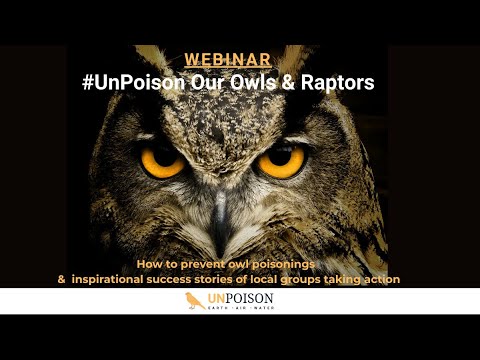
Watch the webinar

UnPoison Our Owls & Raptors

Owl poisonings in Keurboom Park and Cape St Francis prompted local action. The webinar explores how communities can help protect owls, raptors and other wildlife from secondary poisoning.

UnPoison’s original page described Cape St Francis residents asking retailers to remove hazardous pest-control products, a local pest-control company switching to electric traps, and a proposal to replace what it described as Cape Town’s 66,000 rat-bait stations. These are historical campaign examples, not a statement of current progress.

Watch on YouTube (opens in a new tab)

Preventing harm

Start by removing the attraction.

The original Animals page starts with sanitation: remove accessible food, keep edible business waste in sealed containers, clear food from around bins, and use enclosed compost systems for kitchen scraps. It also advises removing bird feeders where spilled seed attracts rats.

It recommends enclosed T-REX snap traps as a non-poison option, distinguishing larger American and smaller Chinese versions. Its central safety point is that a trap must sit inside a suitable bait station so cats, ground birds and children cannot reach it. Ask a qualified pest-control professional about an appropriate, humane setup for your situation.

These trapping options appeared on UnPoison’s previous website; ask a qualified pest-control professional what is appropriate and safe locally. This guide is not a substitute for veterinary care. For further background, see the Merck Veterinary Manual’s overview of rodenticide poisoning and the NSPCA’s animal-poisons guidance.

UnPoison our wildlife

Help your suburb go poison-free.

The WordPress page invited people concerned about poisons in their suburb and public spaces to become a “champion”. The linked UnPoison Champs form is broader than this page: it offers suburb action on the herbicide spray list, thematic action on topics including pets, and the option to do both. UnPoison offers tools, templates, resources and a community of other champions to help local action.

Join UnPoison Champs (opens in a new tab)

This is the existing UnPoison Champs sign-up form, hosted separately on Google Forms. For campaign questions, contact UnPoison.

From the original Animals page

Wildlife questions.

The following topics are preserved from UnPoison’s previous website. Handling a bird of prey can be dangerous to both you and the bird. Contact a licensed wildlife rehabilitator or vet first. The former home-treatment claim is discussed below for transparency; it is not a treatment recommendation.

How to approach and capture a poisoned owl, raptor or bird of prey

Observe before approaching. The original guide says to attempt capture only if a rehabilitator instructs you, and only if the bird is grounded and unable to fly. Possible signs include not flying away, lethargy, poor coordination, seizures, head tilting, bleeding from the beak, fluffed feathers or half-closed eyes.

It says immediate containment may be needed if the bird cannot fly and is in danger from traffic, dogs, people or rain, while help is on the way. The guide describes using thick gloves, a large towel and a ventilated cardboard box; approaching slowly from behind; covering the bird’s wings and head with the towel; holding the wings gently against its body without forcing them open; and placing the bird, towel included, into the box. Keep the box quiet, dark and indoors.

Do not give food or water, force-feed, allow children or pets near the bird, or leave it in a hot car or direct sun. The original page warns that giving water by mouth can cause aspiration.

How to transport an injured owl, raptor or bird of prey

The original guide says to take the bird to a rehabilitation facility as soon as possible. During transport, keep the box stable, dark and quiet, and avoid loud noises or sudden movements. Arrange transport with a rehabilitator or veterinarian where possible.

How to administer a homeopathic treatment to a poisoned bird of prey

Needs clinical review — not a treatment recommendation. The WordPress page proposed Arsenicum album 200C and gave a method for applying diluted drops to a bird’s beak. This claim and procedure have been retained for editorial review, but we have not found evidence that homeopathy treats rodenticide poisoning. Do not delay veterinary or rehabilitation care to try a home remedy.

The original cautions against squirting fluid into the mouth or tilting the head back because of aspiration risk. A veterinarian must determine treatment based on the suspected poison; vitamin K1 is used for anticoagulant rodenticides, but not all rodenticides work the same way.

Have a question about the campaign or this guidance? Contact UnPoison. The original page also had a contact form; the local draft routes enquiries through the site’s contact page.